Small Business Digital Transformation Serbia 2026: 38+ Data Points
E-commerce growth, EU IPA funds, NALED digitalization, e-invoicing, post-COVID adoption — aggregated from PKS, RZS, EBRD, and NALED for SMBs in Serbia.
Change history (3)
- — EN parity backfill matching SR sibling (bezsajta-blog skill 2026-05-11): inline hero SVG + 2 inline data charts (ecommerce-growth + digital-adoption-gap) + 2 CitationCapsule blocks + H3 sub-structure in sections 1 and 3.
- — Added a Q&A block with 6 questions (FAQPage schema) — e-commerce growth, micro-firms vs online sales, e-invoicing, EBRD/EU IPA funds, ICT sector, card acceptance.
- — First version — aggregated statistical guide, every figure traceable to Tier 1/2 sources (RZS, Eurostat, PKS, NBS, Wolt, Statista, BrightLocal).
Introduction
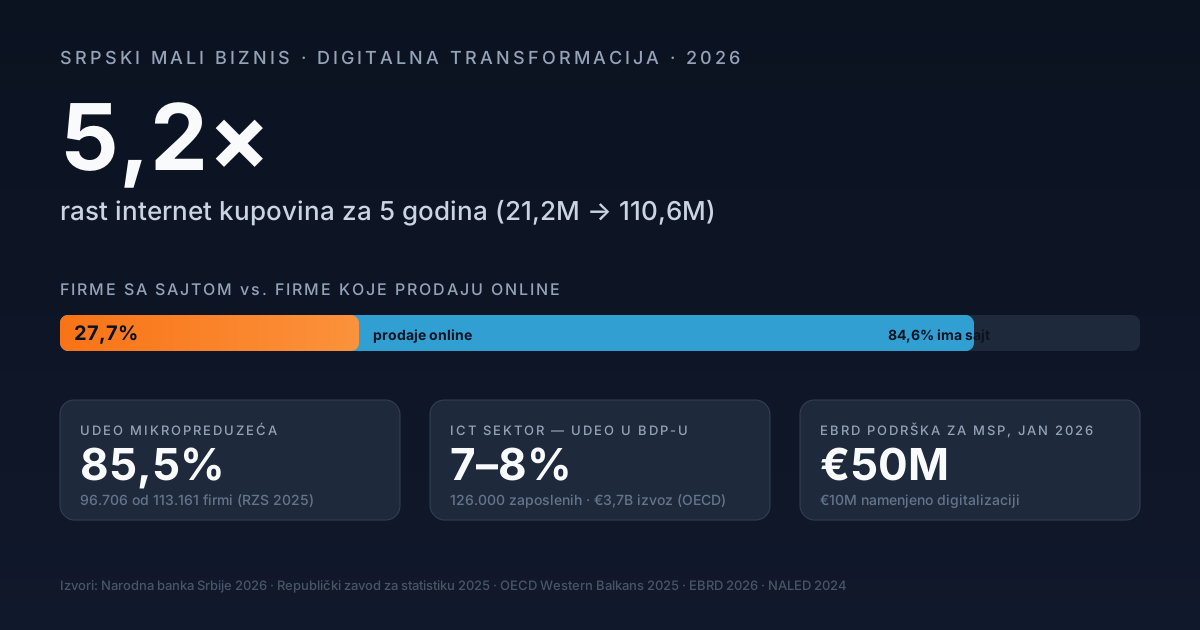
Online purchases in Serbia grew from 21.2 million in 2020 to 110.6 million in 2025 — a 5.2x increase in five years (National Bank of Serbia, Annual Report on Internet Commerce 2026). The ICT sector accounts for 7–8% of Serbian GDP, employs 126,000 people, and exported €3.7 billion in 2024. Even so, 85.5% of Serbian businesses are micro-businesses with up to 9 employees, and digital adoption in that segment lags well behind the corporate sector. This post aggregates data from NBS, RZS, OECD, NALED, and other sources to show where Serbian small businesses actually stand in 2026.
Key findings
- The number of online purchases in Serbia grew 5.2x from 2020 to 2025, from 21.2 million to 110.6 million per year (NBS, Annual Report on Internet Commerce 2026)
- 5,632 domestic online stores were active at the end of 2025, 19.2% more than a year earlier (NBS, 2026)
- The ICT sector accounts for 7–8% of Serbia's GDP with 26% annual export growth over the past ten years (OECD Western Balkans Economic Convergence Scoreboard 2025)
- 85.5% of Serbian businesses are micro-businesses with up to 9 employees; 96,706 of 113,161 registered companies (RZS, Enterprises by Size 2021–2023, 2025)
- Since January 2023, all VAT-registered businesses must use the e-Invoice System (SEF) for B2B and B2G invoicing (Serbian Ministry of Finance)
- Only 10% of municipalities have fully digitized procedures, while 95% of business filings still require paper submission (NALED, Municipal Digitization Survey 2024)
- In January 2026, EBRD approved €50 million for SMEs in Serbia through ProCredit Bank, of which €10 million is earmarked exclusively for digital transformation and automation (EBRD, 2026)
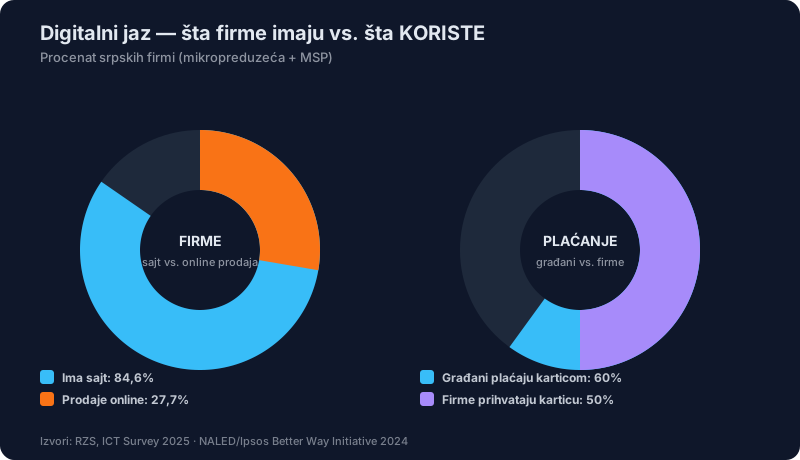
- Over 60% of Serbian citizens use cashless payment, but only about 50% of businesses accept card payments (NALED/Ipsos, Better Way Initiative 2024)
- Serbia's digital payment market reached $7.83 billion in 2025, with projected growth to $19.11 billion by 2029 (Statista, Digital Payments Market Forecast 2025)
- 51.8% of internet users in Serbia made an online purchase in the last three months; 24.2% have never bought online (RZS, ICT Usage Individuals Survey 2024)
1. E-Commerce and online purchases: exponential growth
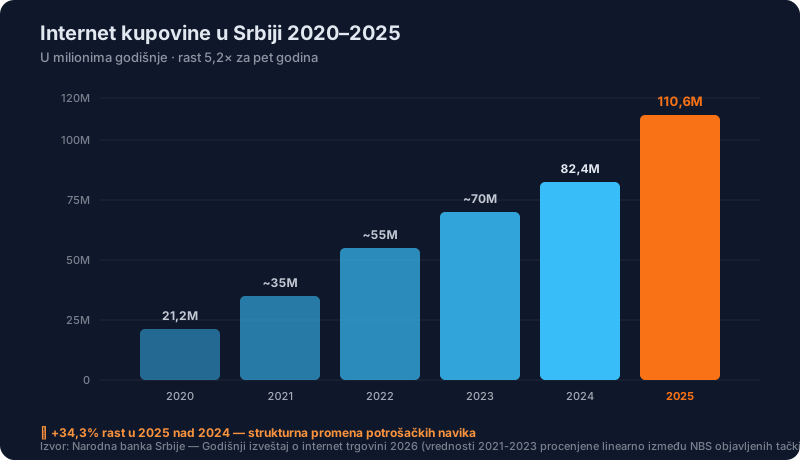
National Bank of Serbia data puts the scale in focus. From 21.2 million purchases in 2020 to 82.4 million in 2024 to 110.6 million in 2025, growth has accelerated. 34.3% in a single year reflects a structural shift in Serbian consumer habits, not a one-off spike. Small businesses without an online channel are turning that absence into a recurring cost.
Growth trajectory 2020 → 2025
Daily volume and active store count
A daily average of 303,000 online purchases in 2025 (NBS) across 5,632 active domestic stores works out to roughly 54 orders per store per day. Most micro-firms fall outside that count, ceding that demand to whoever shows up online.
What this means for a business that still lacks online presence
A market growing 30%+ per year rewards late entry less each month. Businesses entering digital now are joining a rising curve, not fighting over a fixed share.
For local businesses that want to catch this wave, Bezsajta offers fast website builds tailored to Serbian small businesses.
| Metric | Value | Source | |--------|-------|--------| | Online purchases in Serbia 2025 | 110.6 million | NBS, Annual Report 2026 | | Annual growth 2025 vs. 2024 | +34.3% | NBS, 2026 | | Online purchases in 2024 | 82.4 million | NBS, 2025 | | Online purchases in 2020 | 21.2 million | NBS, 2021 | | Growth from 2020 to 2025 | 5.2x | NBS, 2026 | | Daily average purchases in 2025 | 303,000 | NBS, 2026 | | Value of dinar online transactions 2024 | 162.3 billion RSD | NBS, 2025 | | Domestic online stores (end of 2025) | 5,632 (+19.2% YoY) | NBS, 2026 | | B2C e-commerce market Serbia 2024 | €846.4 million | ECDB, Serbia Ecommerce Report 2024 | | Projected B2C market 2025 | €910.8 million | ECDB, 2024 |
Source: National Bank of Serbia, internet commerce reports
2. ICT sector: the engine of Serbian economic growth
Serbia ranks second in the Western Balkans by ICT sector share of GDP, behind only Cyprus on gross value added. IT services exports grew 26% per year on average over the past decade; the government's €10 billion target by 2027 tracks that curve directly. Average gross salary in the ICT sector reached €2,665 in 2024, up 92% in four years (OECD Western Balkans Scoreboard 2025). That spending power raises demand for digital services and pushes surrounding businesses to meet the same standard.
| Metric | Value | Source | |--------|-------|--------| | Serbian ICT exports 2024 | €3.7 billion | NBS, Serbian Monitor 2024 | | ICT export growth Jan–Jul 2024 YoY | +20.29% | NBS, 2024 | | Average annual ICT export growth (10 yr) | 26% | OECD Western Balkans Scoreboard 2025 | | ICT sector as share of GDP | 7–8% | OECD Western Balkans Scoreboard 2025 | | Number of ICT employees in 2024 | 126,000 | OECD Western Balkans Scoreboard 2025 | | ICT employment growth 2020 to 2024 | +39% | OECD Western Balkans Scoreboard 2025 | | Average gross ICT salary (2024) | €2,665 (+92% from 2020) | OECD Western Balkans Scoreboard 2025 | | ICT export goal by 2027 | €10 billion | Government of Serbia, 2024 |
Source: OECD Western Balkans Economic Convergence Scoreboard 2025
3. Digital infrastructure of small businesses
SMEs account for 99.8% of Serbian business entities, 54.1% of gross value added, and 43.2% of exports. Within that group, micro-businesses with up to 9 employees (85.5% of all firms) have the lowest digital readiness. RZS data (2020, latest available) shows 84.4% of businesses have an internet presence, but presence doesn't equal sales activity. Population internet penetration hit 91.8% in January 2026; customers are online and businesses need to meet them there.
Micro-firms as 85.5% of the market
Micro-firms with up to 9 employees account for 96,706 of Serbia's 113,161 registered companies (RZS, 2025). For most of them, a website functions as a business card rather than a sales channel.
The gap between having a website and selling online
Cost of not matching consumer behavior
With 91.8% internet penetration, customers are online. When 72% of micro-firms don't sell online and 50% don't accept cards, that gap costs the firm. EBRD approved €10 million specifically for digital transformation of Serbian SMEs through ProCredit Bank in January 2026; early applicants gain an advantage the late majority will not.
For Serbian companies without a web presence, Bezsajta offers fast website builds and launches focused on local businesses. More practical guides for digital launch are available at the Bezsajta blog.
| Metric | Value | Source | |--------|-------|--------| | Total businesses in Serbia | 113,161 | RZS, Enterprises by Size 2021–2023, 2025 | | Micro-businesses (up to 9 employees) | 96,706 (85.5%) | RZS, 2025 | | SME share of gross value added | 54.1% | European Commission, SME Fact Sheet Serbia 2021 | | SME share of total exports | 43.2% | European Commission, 2021 | | Businesses with internet presence (latest available data, 2020) | 84.4% | RZS, ICT Usage in Enterprises Survey 2020 | | Internet penetration of population in Serbia (2026) | 91.8% (6.13 million users) | DataReportal, Digital 2026 Serbia | | Social media users in Serbia | 4.83 million (72.3% of population) | DataReportal, Digital 2026 Serbia | | Internet users who shopped online (last 3 months) | 51.8% | RZS, ICT Usage Individuals Survey 2024 |
Source: Statistical Office of the Republic of Serbia, enterprises by size overview
4. E-Invoicing and e-Government: requirement vs. reality
Serbia mandated the e-Invoice System for all VAT-registered businesses in 2023, and the private sector complied. Municipal government moved in the opposite direction. Only 10% of municipalities have fully digitized procedures, and 95% of business filings still require paper submission (NALED, 2024). Small businesses absorb that cost in hours spent at counters rather than running the business.
| Metric | Value | Source | |--------|-------|--------| | B2B e-invoicing required since | January 2023 | Serbian Ministry of Finance, e-Invoicing Act | | Municipalities with fully digitized procedures (>90%) | 10% | NALED, Municipal Digitization Survey 2024 | | Municipal filings still on paper or counter | 95% | NALED, 2024 | | Municipalities with strategic e-services planning | 14% | NALED, 2024 | | Annual ICT spend per municipality (top performers) | €40,000 | NALED, 2024 | | Annual ICT spend per municipality (others) | €8,500 | NALED, 2024 | | Municipalities without a single IT specialist | 11% | NALED, 2024 | | m-banking user growth in 2024 | +13.9% | NBS, Payment Statistics Q4 2024 | | m-banking transaction growth in 2024 | +25.7% YoY | NBS, 2024 |
Source: NALED, Municipal Digitization Survey Serbia 2024
5. EU funds and financial support for digitization
Serbia is among the largest IPA beneficiaries in the region, and since January 2026 an EBRD credit line targeting SME digitization sits open. The main barrier is not funds but awareness: most small entrepreneurs don't track public calls. EBRD approved €50 million for Serbian SMEs through ProCredit in January 2026; €10 million of that is reserved for digital transformation and automation (EBRD, Press Release January 2026). The money is live this year.
An overview of available digitization support programs for local businesses in Serbia is at Bezsajta.rs.
| Metric | Value | Source | |--------|-------|--------| | IPA III funds approved to Serbia 2021–2023 | €450 million | European Commission, IPA III Annual Action Plans | | IPA 2024 Action Plan: total EU aid | €83.37 million | European Commission, IPA 2024 AAP | | IPA 2024: SME equipment grant (25% rebate) | €10 million | European Commission, IPA 2024 AAP | | EBRD "Go Digital" Western Balkans: total loans | €350 million | EBRD/WBIF, 2024 | | EBRD "Go Digital": EU grant funds | €27.6 million (up to 10% of loan amount) | EBRD/WBIF, 2024 | | EBRD ProCredit Serbia 2026: total package | €50 million | EBRD, Press Release January 2026 | | Of which for digital transformation | €10 million | EBRD, 2026 | | NALED StarTech: total program value | $5 million | NALED, StarTech Program 2023–2025 | | NALED StarTech: grant per SME | $15,000 – $100,000 | NALED, 2024 |
Source: EBRD, support for SME digital transformation in Serbia, January 2026
6. Cashless payment and point-of-sale digitization
Cashless payment is the most visible digital gap at point of sale. Over 60% of Serbian citizens pay without cash, predominantly by card (81% of cashless users). Supply has not kept up: only about 50% of Serbian businesses accept card payments, and 1% accept QR payments (NALED/Ipsos, Better Way Initiative 2024). Serbia has 2.2x fewer POS terminals per million inhabitants than the EU average. The digital payment market grew to $7.83 billion in 2025 and is projected to reach $19.11 billion by 2029 at a CAGR of 24.99%.
| Metric | Value | Source | |--------|-------|--------| | Serbian citizens using cashless payment | 60%+ | NALED/Ipsos, Better Way Initiative 2024 | | Most-used cashless form: card payment | 81% of cashless users | NALED/Ipsos, 2024 | | Businesses accepting card payment | ~50% | NALED, 2024 | | Businesses accepting QR payment | 1% | NALED, 2024 | | POS terminal deficit vs. EU average | 2.2x fewer per million inhabitants | NALED, 2024 | | Entrepreneurs using POS subsidy (2.5 yr) | nearly 10,000 | NALED, National Initiative 2024 | | Digital payment market Serbia 2025 | $7.83 billion | Statista, Digital Payments Serbia 2025 | | Projected market 2029 | $19.11 billion | Statista, 2025 | | Digital payments CAGR 2025–2029 | 24.99% | Statista, 2025 |
Source: NALED, National Initiative for Cashless Payment
Numbers summary
| Metric | Value | Source | |--------|-------|--------| | Online purchases in Serbia 2025 | 110.6M (+34.3% YoY) | NBS, 2026 | | Online purchase growth 2020–2025 | 5.2x (21.2M to 110.6M) | NBS, 2026 | | Domestic online stores (end of 2025) | 5,632 (+19.2% YoY) | NBS, 2026 | | B2C e-commerce market 2024 | €846.4M | ECDB, 2024 | | Serbian ICT exports 2024 | €3.7B | NBS, 2024 | | ICT share of GDP | 7–8% | OECD Scoreboard 2025 | | ICT employees 2024 | 126,000 (+39% from 2020) | OECD Scoreboard 2025 | | Average gross ICT salary 2024 | €2,665 (+92% from 2020) | OECD Scoreboard 2025 | | Total businesses in Serbia | 113,161 | RZS, 2025 | | Micro-businesses (up to 9 employees) | 96,706 (85.5%) | RZS, 2025 | | SME share of gross value added | 54.1% | European Commission, 2021 | | Internet penetration of population | 91.8% | DataReportal, 2026 | | Users who shopped online (last 3 months) | 51.8% of internet users | RZS, 2024 | | B2B e-invoicing required since | January 2023 | Serbian Ministry of Finance | | Municipalities with fully digitized procedures | 10% | NALED, 2024 | | Filings still on paper or counter | 95% | NALED, 2024 | | EBRD ProCredit 2026: SME Serbia package | €50M | EBRD, 2026 | | Citizens using cashless payment | 60%+ | NALED/Ipsos, 2024 | | Businesses accepting card payment | ~50% | NALED, 2024 | | Digital payment market 2029 (projected) | $19.11B | Statista, 2025 |
Methodology and sources
Research conducted in April 2026. Primary sources (Tier 1: government institutions, central banks, international organizations with published methodology) were prioritized. Tier 2 sources were accepted only when methodology was publicly documented. Blog-cites-blog chains were excluded. Data older than 3 years is marked "latest available data."
- National Bank of Serbia, internet commerce reports
- Statistical Office of the Republic of Serbia, enterprises by size 2021–2023
- Statistical Office of the Republic of Serbia, ICT use in enterprises
- Statistical Office of the Republic of Serbia, ICT use among individuals
- OECD Western Balkans Economic Convergence Scoreboard 2025
- European Commission, SME Fact Sheet Serbia 2021
- European Commission, IPA financial assistance to Serbia
- EBRD, support for SME digital transformation in Serbia, January 2026
- NALED, Municipal Digitization Survey 2024
- NALED, Better Way Initiative, cashless payment 2024
- NALED, National Initiative for Cashless Payment
- NALED, StarTech program for SME innovation and transformation
- DataReportal, Digital 2026: Serbia
- ECDB, Serbia Ecommerce Industry Report
- Statista, Digital Payments Market Forecast Serbia
- Statista, Generative AI Serbia Market Forecast
- Government of Serbia, Strategy for AI Development 2025–2030
- World Bank, Western Balkans Regular Economic Report 2025
- KPMG Serbia, e-Invoicing Act amendments 2024
- Serbian Monitor, ICT exports of Serbia 2024
Last updated: April 2026. We update this page quarterly.